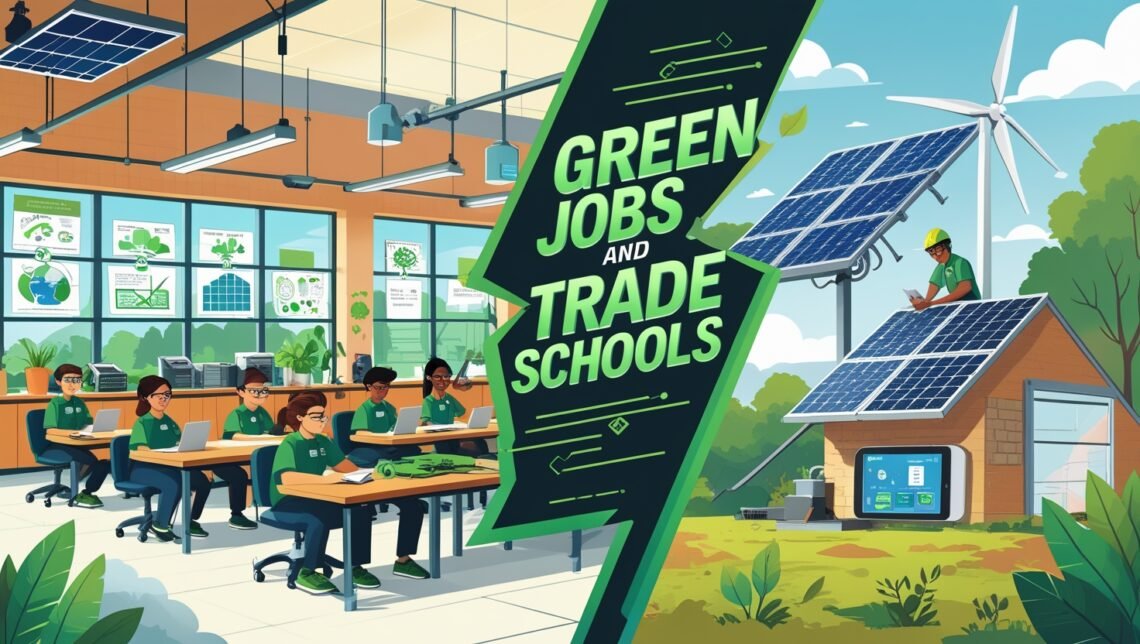
In today’s time, when climate change and environmental issues have become very serious, the demand for green jobs is increasing rapidly. Green jobs are careers that are beneficial for the environment or work that does not hurt the environment today. The basic aim of these jobs is to promote sustainability, that is, such use of resources that is also safe for future generations. Green jobs are available in fields like renewable energy, recycling, pollution control, and eco-friendly construction. Governments and private sectors across the world are now investing in these roles because they know that if changes are not brought about today, tomorrow will be very difficult. These are new and stable career options for the youth where they can not only earn well but also do something positive for the environment.
Every year, new laws and regulations are coming that are forcing companies to adopt green practices, the direct benefit of which is going to those people who are already trained with green skills. Hence, for today’s students, green jobs are not just an option but have become an essential part of the future. This demand is increasing day by day, and every person who makes his place in this field not only secures his career but also plays his role in saving the land.
The Role of Trade Schools in Promoting Sustainability
Trade schools, i.e., vocational institutions, today are not only teaching traditional skills but have also made sustainability a part of their curriculum. Earlier environmental studies were conducted only in universities and research centers, but now trade schools have also realized that if the future has to be made safe, then they will also have to impart green skills to the students. These schools are famous for practical training, and when they teach green practices, the students see their effect in real life. Such courses are now being introduced in trade schools that focus on renewable energy systems like solar and wind power. They are also taught how construction or repair work can be made environment-friendly. The concept of sustainability is implemented in these schools through waste reduction, efficient energy use, and eco-friendly materials.
The advantage of these programs is that the student does not just study theory but does hands-on work, which increases their experience, and they can easily enter the job market. Trade schools offer short-duration programs, which means that the student gets ready for the green field in less time. When trade schools promote green training, they are not just building a student’s career, but are working towards a safer and cleaner world that has a long-term impact on society.
Popular Green Vocational Programs in Trade Schools:
Today’s trade schools offer several green vocational programs that prepare students for sustainability and environment-friendly careers. The most popular program is renewable energy technician, where students are taught to install solar panels, maintain them, and troubleshoot. These skills are in great demand as people and companies everywhere are adopting solar energy. After that, green construction programs have also become quite popular, where students are taught how buildings can be constructed using eco-friendly materials and sustainable designs. HVAC programs, i.e., heating, ventilation, and air conditioning, have also shifted to green mode, where work on designing and maintaining energy-efficient systems is taught. Another rising program is on sustainable agriculture, where students are taught ways of farming naturally, growing crops without pesticides, and conserving water.
These programs are not only good for the environment, but their demand is also increasing in the job market. Trade schools teach students tools and techniques through these programs that not only help them in getting green jobs but also make them responsible citizens. When a student completes such a program, he has a strong foundation that allows them to grow in their career with the principles of sustainability
Skills and Certifications Required for Green Careers:
Passion or interest alone is not enough to succeed in green careers; specific skills and certifications are also required. Trade schools focus on imparting practical knowledge along with skills that are directly useful in the market. First of all, technical skills are very important, such as solar panel installation, energy audits, HVAC efficiency, green plumbing, and eco-construction. All these skills are taught practically to the students using modern tools so that when they do the job, they can understand any equipment or system. Soft skills are also very important, such as teamwork, problem-solving, and communication, because green projects often require educating people.
Certifications are also an important requirement for green jobs, such as LEED (Leadership in Energy and Environmental Design), NABCEP (solar certification), and EPA certification for green HVAC technicians. These certificates are proof to employers that the candidate is properly trained and qualified. Trade schools prepare students for these certifications, and many schools even include these certifications as part of their programs. When a student has the required skills and valid certifications, his/her chances of getting a job increase and he/she get a good salary package. Both of these things, skills and certifications, serve as the foundation for growing in green careers.
Career Opportunities and Future Prospects in Green Industries:
Career opportunities in green industries are growing rapidly, and their scope will increase even more in the future. Every country has now started taking environmental issues seriously, and governments are introducing new regulations and initiatives, which are increasing the demand for green jobs. Most of the jobs are available in the renewable energy sector, such as solar energy technician, wind turbine installer, and energy efficiency auditor. The demand for these jobs is increasing not only in big cities but also in rural areas, where people are adopting clean energy by shifting from traditional energy. There is also a demand for green building professionals in the construction industry who can design energy-efficient buildings using sustainable materials. Green methods and organic farming are also being adopted in agriculture, where sustainable farming experts are needed. In the future, the transportation sector is also going to turn green, where there will be a huge demand for technicians and engineers due to electric vehicles and hybrid systems.
All these jobs are not only well-paying but also provide long-term stability. This is a golden opportunity for trade school graduates who are trained in the green field. If a student learns green skills today, their career is secure tomorrow. Such people who were earlier in traditional jobs are now shifting towards green sectors because there is growth as well as a mission of sustainability. The future of this field is very bright, and it has become an ideal choice for the new generation.
Conclusion:
A green future is not just a concept but has become a necessity, and trade schools are playing an important role in this path. When students move away from traditional subjects and choose sustainable programs, they are not only choosing a better career for themselves but also making a positive contribution to the environment. Trade schools, which are known for short-term and skill-based education, are very encouraging in participating in the preparation for green jobs. These schools provide practical training through which students can directly enter the job market without any additional university degree. Their focus is that students should gain not just bookish knowledge but experience with real-life tools and methods.
When such trained professionals enter the market, they promote green practices in industries. This process is gradual but impactful. Each student who learns a green skill brings a small change, which together can turn into a big change. This combination of green jobs and trade schools has become an integral part of the modern education system. Every student who is serious about the environment should consider such vocational programs. In this way, they can make the world sustainable along with securing their careers. This journey does not end just with jobs, it is also a way to create a clean and safe world for the future generation
FAQs:
- What are green jobs and why are they important today?
Green jobs are careers that help protect the environment and promote sustainability. These include roles in renewable energy, recycling, pollution control, and eco-friendly construction. They are important because they help fight climate change and ensure the earth remains livable for future generations. - How are trade schools contributing to environmental sustainability?
Trade schools are now including green skills and eco-friendly practices in their training programs. They offer hands-on courses in solar energy, wind power, green construction, and more. This helps students learn practical, job-ready skills while also supporting environmental goals. - What are the most popular green vocational programs offered in trade schools?
Some of the most in-demand green vocational programs include solar panel installation, sustainable construction, green HVAC systems, and eco-friendly farming techniques. These programs prepare students for jobs that are both high in demand and good for the planet. - What skills and certifications are needed to build a career in green industries?
Green careers require both technical and soft skills. Students must learn to install and maintain energy systems, perform energy audits, and use sustainable building materials. Important certifications include LEED, NABCEP (solar), and EPA (green HVAC), which help increase job opportunities and salaries. - What is the future of green careers for trade school graduates?
The future is very promising for green careers. As more countries adopt clean energy and sustainable practices, the demand for skilled workers in these areas is growing. Trade school graduates with green training can expect stable, well-paying jobs and a chance to make a positive environmental impact.