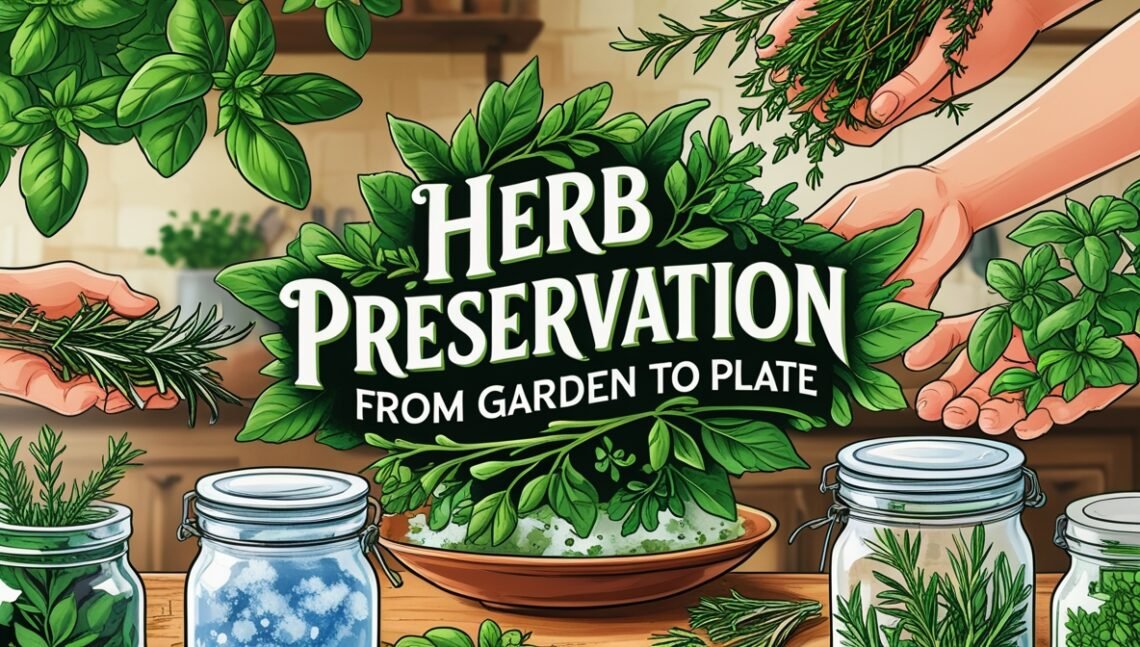
You know that feeling? You’ve poured your heart into your garden all summer. You’ve nurtured those basil plants from wispy seedlings into fragrant bushes. You’ve watched your rosemary thrive against the odds. Then, in a single cold night, it’s all over. Frost takes it. And you’re left staring at a windowsill full of herbs, wondering how on earth you’re going to use it all before it turns to slime. I’ve been there. More times than I care to admit. But here’s the thing, that end-of-season panic? It’s completely avoidable. Preserving your herb harvest isn’t just some old-fashioned chore; it’s your secret weapon for bringing a taste of summer to the darkest days of winter. Let’s get into it.
More Than Just Saving Scraps:
This isn’t just about avoiding waste. Sure, that’s part of it. But it’s about so much more. It’s about capturing a moment.
When you open a jar of your own home-dried oregano in January, the smell that hits you isn’t just oregano. It’s the heat of the July sun. It’s the smell of the earth after a rainstorm. It’s a time capsule. Store-bought dried herbs are a sad, dusty ghost of the real thing. They’ve been sitting in a warehouse for who-knows-how-long. Your preserved herbs? They’re packed with intention and memory.
Plus, let’s talk flavor and finances. A small plastic clamshell of fresh herbs at the grocery store can cost three, four, or five bucks. And half the time, it goes bad before you use it all. That little jar you preserve yourself represents not just flavor, but real savings. You’re not just a gardener; you’re a pantry alchemist.
Picking Your Preservation Path:
There is no single “best” way to preserve herbs. The right method depends entirely on the herb itself and what you plan to do with it later. Anyone who tells you different is oversimplifying. This isn’t a one-size-fits-all situation.
Some herbs are tough, woody, and resilient. Others are tender, leafy, and delicate. They demand different treatment. Using the wrong method is how you end up with brown, flavorless dust or a freezer-burnt brick. We’re going to match the method to the herb. That’s the golden rule.
Method 1: Air Drying, The Old Reliable:
This is the classic for a reason. It’s low-tech, requires almost no special equipment, and it’s perfect for low-moisture, woody-stemmed herbs. Think: Rosemary, Thyme, Oregano, Marjoram, Summer Savory, Dill.
- How to Do It Right: Forget fancy dehydrators for these guys. The best method is shockingly simple. Gather small bunches of herbs, maybe 5-6 stems, and tie them tightly at the base with a rubber band (it tightens as the stems shrink). Hang them upside down in a warm, dry, dark place with good air circulation. A pantry, a warm attic, a closet. NOT the kitchen. The light will bleach the color and the humidity from cooking will ruin them.
- How You Know It’s Done: After about 1-2 weeks, the leaves will be crispy and crumble easily between your fingers. They should shatter, not bend.
- The Big Mistake Everyone Makes: Rushing it. If there’s any moisture left, they’ll mold in the jar. Be patient. Let them get bone-dry.
Method 2: The Dehydrator, For the Delicate Ones:
Air drying is too slow and humid for tender, high-moisture herbs. They’ll mold before they dry. For Basil, Cilantro, Mint, Tarragon, and Chives, a dehydrator is your best friend.
- How to Do It Right: Pluck the leaves from the stems and spread them in a single layer on the dehydrator trays. Keep the temperature low, 95°F to 115°F (35°C to 46°C). High heat will cook them and vaporize their precious volatile oils, which is where the flavor lives. You want to remove water, not bake them.
- How You Know It’s Done: Same as air drying. The leaves should crumble to dust with a little pressure. They’ll retain a shocking amount of their green color if you do it low and slow.
- The Big Mistake Everyone Makes: Blasting them with high heat because they’re impatient. You’ll end up with brown, tasteless hay.
Method 3: Freezing, Capturing Freshness:
Drying is great, but it changes the flavor profile. Freezing is the way to go if you want that “just-picked” flavor for cooked dishes. This is brilliant for any soft herb, but especially Basil, Cilantro, Parsley, Dill, and Chives.
- The Ice Cube Tray Trick: This is a game-changer. Chop your herbs finely. Pack them into ice cube trays. Top them off with water, olive oil, or even melted butter. Freeze solid, then pop the cubes out into a labeled freezer bag. Now, whenever you’re making a soup, stew, sauce, or pasta, just toss in a cube. Instant flavor bomb.
- The Simple Freeze-Flatten: Don’t want to deal with cubes? Wash and thoroughly dry your herbs. Place them in a single layer on a parchment-lined baking sheet and flash-freeze for an hour. Then, transfer the frozen leaves to a freezer bag. This prevents them from freezing into one giant, unworkable clump. You can just grab a pinch whenever you need it.
- The Big Mistake Everyone Makes: Not drying the herbs well enough before freezing. Water equals ice crystals, which equals freezer burn and mushy, disgusting herbs.
Method 4: The Paste, The Flavor Concentrate:
This is my secret weapon for pesto-level flavor without making actual pesto. It’s perfect for Basil, Cilantro, or Parsley.
- How to Do It Right: Take a big bunch of herbs and throw them in the food processor with just enough olive oil to make a thick, gritty paste. Scrape this paste into a jar, pour a thin layer of oil on top to seal out air (this prevents browning), and stick it in the freezer. You can also freeze it in dollops on a baking sheet first.
- How to Use It: A spoonful of this paste is incredible stirred into mayo for a sandwich spread, mixed into salad dressings, rubbed on meat before roasting, or tossed with hot pasta.
- The Big Mistake Everyone Makes: Adding garlic or cheese to the paste before freezing. Those ingredients don’t freeze as well and can develop off-flavors. Add them fresh when you’re ready to use the paste.
Method 5: The Infusion, Preserving in Liquid:
Why just preserve the herb when you can preserve its soul in a liquid?
- Herb-Infused Vinegars: This is so easy it feels like cheating. Take a clean jar. Stuff it full of clean, dry herbs like Tarragon, Rosemary, Thyme, or Basil. Heat some vinegar (white wine, red wine, or apple cider) until it’s hot but not boiling. Pour it over the herbs, seal the jar, and let it sit in a dark cupboard for 2-3 weeks. Strain. You now have the most incredible salad dressing base imaginable.
- Herb-Infused Oils: A word of serious caution: Infusing oil with fresh herbs at room temperature can create a risk for botulism. To do it safely, you must either A) Heat the oil and herbs together and then use it within a week or two, or B) Acidify the herbs first. Honestly, for long-term storage, the vinegar method is safer and just as rewarding.
Storing Your Treasure:
You’ve done the hard work. Don’t mess it up with bad storage.
- Dried Herbs: Once they are crackly-dry, crumble the leaves (discarding the stems) into an airtight container. A mason jar is perfect. Store them in a dark, cool cupboard. Light and heat are the enemies of flavor. They will be good for about a year, but honestly, you’ll use them up long before that.
- Frozen Herbs: Keep them in airtight freezer bags, squeezing out all the air. They’ll keep for 6 months to a year before they start to lose their oomph.
The Real Reward:
This might seem like a lot of work. And sometimes, on a hot day when you’d rather be doing anything else, it feels like it. But then, in the dead of winter, you’ll reach into your cupboard for that jar of your own thyme. You’ll open it, and for a split second, it will be summer again. You’ll stir a cube of frozen basil into a pot of tomato soup, and the flavor will be so vibrant, so alive, it will beat anything you can buy. That’s the real goal. It’s not just preservation. It’s time travel on a plate.
FAQs:
1. What’s the easiest herb for a beginner to preserve?
Rosemary or thyme; just tie them in a bundle and hang them in a closet for two weeks—it’s almost foolproof.
2. Why did my dried basil turn brown and lose its flavor?
You likely used too much heat, either from a too-hot dehydrator or a sunny window, which cooks the leaves instead of drying them.
3. Can I preserve herbs like chives by drying them?
You can, but they become papery and lose a lot of flavor; freezing is a much better method for chives.
4. How long do home-preserved herbs actually last?
Properly dried herbs keep their best flavor for about a year; frozen herbs are best used within 6-8 months.
5. Is it safe to make garlic-herb oil?
It’s risky; garlic immersed in oil at room temperature can create botulism toxin—always heat-infuse and refrigerate if using garlic.
6. What do I do with all the herb stems?
Don’t toss them! Woody stems from rosemary or thyme are fantastic for adding to the coals when grilling, or simmering in soups and stocks for extra flavor.