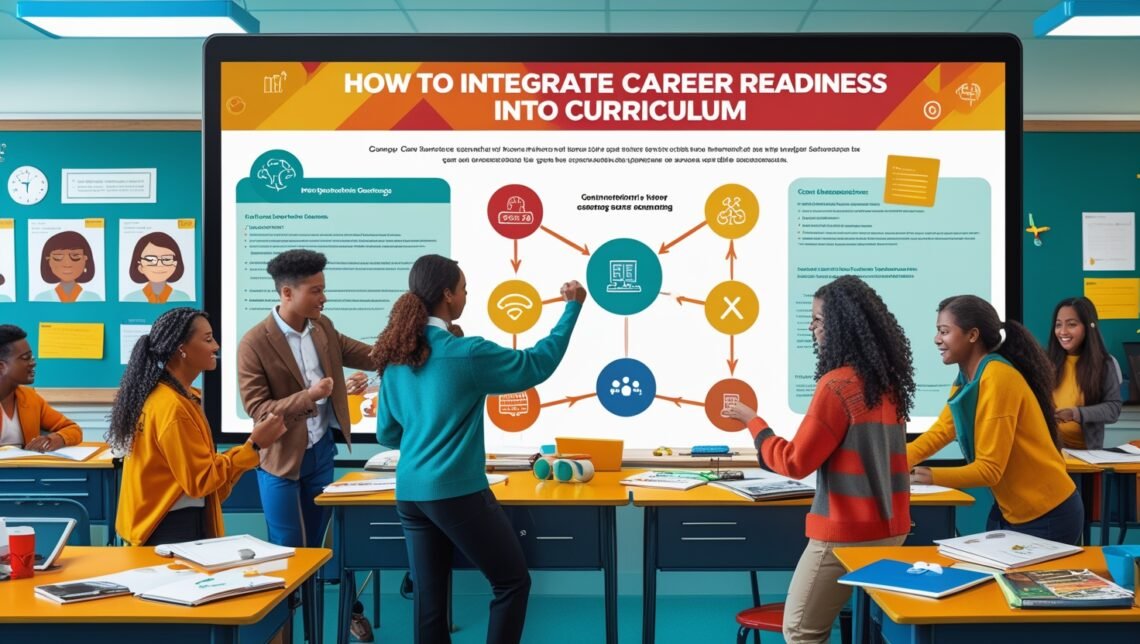
In today’s bright and constantly changing job market, the concept of career readiness is not just a luxury; it has become a necessity. Career readiness means that students should not just focus on academic knowledge but also have practical skills that prepare them for real-world jobs and challenges. Often, school and college systems focus only on providing theoretical education, while students face the practical world after graduation. This gap becomes an obstacle to their confidence, performance, and career growth. Therefore, it is important that career readiness be made an integral part of the curriculum. When students become strong in areas such as communication, teamwork, problem-solving, and digital skills during their academic journey, they are better equipped for job interviews, internships, and future careers.
Today, employers look for people who not only have degrees but also know work methods, attitudes, and skills. Integrating career readiness in the curriculum means that we are teaching students not just bookish knowledge but also the practices of life and career. This integration gives them a strong foundation where they can choose a purposeful career by understanding their interests and strengths. In this way, the real purpose of education, i.e., making students productive and successful citizens, is fulfilled.
Identifying Key Career Competencies for Students:
Career readiness is not just a broad idea; rather, it includes some specific skills and competencies that are important for every student. The first competency is communication skills, in which students must know the right way to write, speak, and listen so that they can effectively communicate their ideas to others. The second important skill is critical thinking, where students can logically analyse a problem and find a solution. Today, employers look for people who can think and make decisions in difficult situations despite pressure. The third competency is teamwork, where students are taught how to work in a group, respect others’ opinions, and do their part in the best possible way.
Digital literacy has also become an essential skill, where students must know how to use basic tech tools, data handling, and online professionalism. Apart from these, adaptability and time management are also part of career readiness, where students are taught to adjust in dynamic environments and meet deadlines. When the curriculum identifies these competencies and starts teaching them systematically, students develop self-awareness and confidence. Every student has different skills, so it is important that the curriculum is flexible enough to understand the strengths of every type of student and give them an opportunity to move ahead. These career competencies are not just related to the job market but also the challenges of the entire life.
Aligning Curriculum Goals with Industry Needs:
If students are to be prepared realistically for the future, it is very important to align the curriculum with the real needs of the industry. Often, the syllabus of schools and colleges is outdated, where students study things that are not used in the market or are not in demand. Because of this, students graduate but do not have the skills that employers seek. This disconnect is not just harmful for students but also for the economy. The solution to this issue is that educational institutions should directly partner with industry experts and employers, take feedback from them, and revise the curriculum by understanding their needs. This not only makes the courses relevant but also helps students understand the purpose for which they are being studied.
For example, if demand for data analytics is increasing in a field, then Excel, Python, and data visualization tools should be included in the curriculum. Similarly, if the scope of soft skills like client communication and customer handling is increasing, then their training should also be a part of the curriculum. Graduates are more productive and employable when academic goals match with market requirements. This alignment acts as a bridge between education and employment that smoothly takes students towards their careers. Such a curriculum sets a new standard of innovation and relevance that can lead to long-term success.
Incorporating Work-Based Learning and Internships:
The integration of work-based learning and internships is the part of the curriculum that transforms theory into real-world experience. When students are limited to textbooks and lectures, their exposure is limited, but when they can be part of actual organizations, businesses, or industries, they gain practical knowledge that is not written in any book. Internships give students the opportunity to understand what expectations are in a professional environment, how deadlines are met, and how real problems are solved. This type of learning model is not just limited to skill development; it also helps in building confidence and career decision-making.
When a student works in a field, they get to know whether that field suits their interests and strengths or not. Through work-based learning, students apply their academic learning and improve themselves by receiving practical feedback. Educational institutes should sign MOUs with companies and create a system of internships, part-time roles, or project collaborations for the students. These experiences strengthen their CVs and clear their career pathways at an early stage. Such programs prepare future-ready graduates who not only have degrees but also have work experience.
Using Technology and Career Planning Tools in the Classroom:
Today is the time of digital transformation, and education has also been influenced by it. When it comes to career readiness, the role of technology and planning tools becomes very crucial. Today’s students are more comfortable with digital tools than traditional methods, so making these tools a part of the classroom makes their learning relevant and engaging. Career planning platforms such as LinkedIn Learning, Coursera, Khan Academy, and Naviance give students the opportunity to explore courses based on their interests, learn skills, and build portfolios. By using such tools in the classroom, students get to experience self-paced and customized learning where they develop skills at their own pace. Apart from this, career assessment tools help students understand their aptitude, interests, and strengths so that they can make informed decisions about which field they should pursue.
Teachers and counsellors can also use these tools to track progress and provide personalized guidance to students. This kind of digital integration prepares students not only for the present but also for future career challenges. Today, there is a demand for digital literacy and self-directed learning in every field, and when the classroom adopts these tools, students naturally start looking for things that they would need in the professional world. These tools make the classroom a dynamic and career-focused place.
Conclusion:
When we integrate career readiness into the curriculum, we move beyond the idea of just making students pass and prepare them realistically for the future. This integration gives students the skills, knowledge, and exposure that lead them not just to a job, but to a purposeful career. Today’s job market is fast-changing and competitive, and traditional education models are unable to meet this demand. Therefore, the curriculum must combine theory and practice. When students leave school or college and directly become a part of the professional world, they should not feel confused or unprepared. For this transformation, educators, institutions, industry, and policymakers all have to work together.
Modules will have to be prepared for students who develop their soft skills, technical abilities, and decision-making power. Internships, digital tools, personalized guidance, and real-world exposure will have to be a part of the curriculum. When all these elements come together, a generation is prepared that is not only academically sound but is also competent as per the demand of the industry. Integration of career readiness is a long-term investment that proves beneficial not just for the students but for the entire society. This approach not only secures their future but also inspires and empowers them to make their own life decisions and pursue them confidently.
FAQs:
Q1: What is career readiness, and why is it important in today’s curriculum?
Answer: Career readiness refers to the combination of academic knowledge and practical skills that prepare students for real-world jobs and challenges. It’s important because today’s job market demands more than just degrees—it requires communication, teamwork, problem-solving, and digital fluency. Integrating career readiness into education ensures students graduate with the confidence and competence to succeed professionally, bridging the gap between academic learning and workplace expectations.
Q2: What key competencies should be included in a career readiness curriculum?
Answer: A comprehensive career readiness curriculum should include core competencies like communication (writing, speaking, listening), critical thinking, teamwork, digital literacy, adaptability, and time management. These skills not only help students thrive in professional environments but also in personal life situations. Including these competencies in education builds self-awareness, encourages personal growth, and prepares students for both the job market and life’s broader challenges.
Q3: How can educators align curriculum goals with current industry needs?
Answer: Educators can align curriculum goals with industry needs by collaborating directly with employers and industry experts. This means regularly updating course content to reflect the latest trends, tools, and skill demands in the job market. For example, if industries are seeking data literacy, curricula should include tools like Excel, Python, or Tableau. This alignment ensures students are job-ready upon graduation and supports national economic development by closing the skills gap.
Q4: Why are internships and work-based learning important for students?
Answer: Internships and work-based learning give students hands-on experience in real-world settings, allowing them to apply what they’ve learned in class. These experiences help students understand professional expectations, build confidence, and clarify career interests. They also enhance resumes and develop networks that are valuable for future employment. Such programs make learning more relevant and prepare students to enter the workforce with practical, tested skills.
Q5: How can technology and career planning tools improve career readiness in schools?
Answer: Technology enhances career readiness by offering tools that personalize learning and provide access to global resources. Platforms like LinkedIn Learning, Coursera, and Naviance help students explore career paths, gain new skills, and build digital portfolios. Career assessment tools help identify students’ strengths and interests, allowing for better career guidance. Integrating these tools into classrooms promotes digital fluency, encourages self-directed learning, and ensures students are prepared for modern career demands.